


I pulled into this week expecting disappointment to be the headline.
There was supposed to be a barbecue event in Colorado, the kind of booking that looks clean on a calendar until you get close enough to see the cracks. What I ran into instead was a promoter who, to put it plainly, did not move with truth or respect for the craft. I trusted my instincts, pulled out, and for a moment, it felt like the whole week was about to slide off the rails. Then, in a twist only the road can write, I found myself in Austin anyway, stepping into four days of barbecue, conversations, and small moments that left a bigger mark than the original plan ever would have. Here’s just a peek into day one of my time in Austin.
Austin has a way of doing that. It is a city that wears growth and grit at the same time, where new money and old traditions bump shoulders daily. But even beyond the city limits, Central Texas feels like a living archive of smoke, steel, and patience. That is what I came to chase; even if I arrived carrying a little frustration in my chest, I eventually let it go. I truly hate having my time wasted. But I digress.
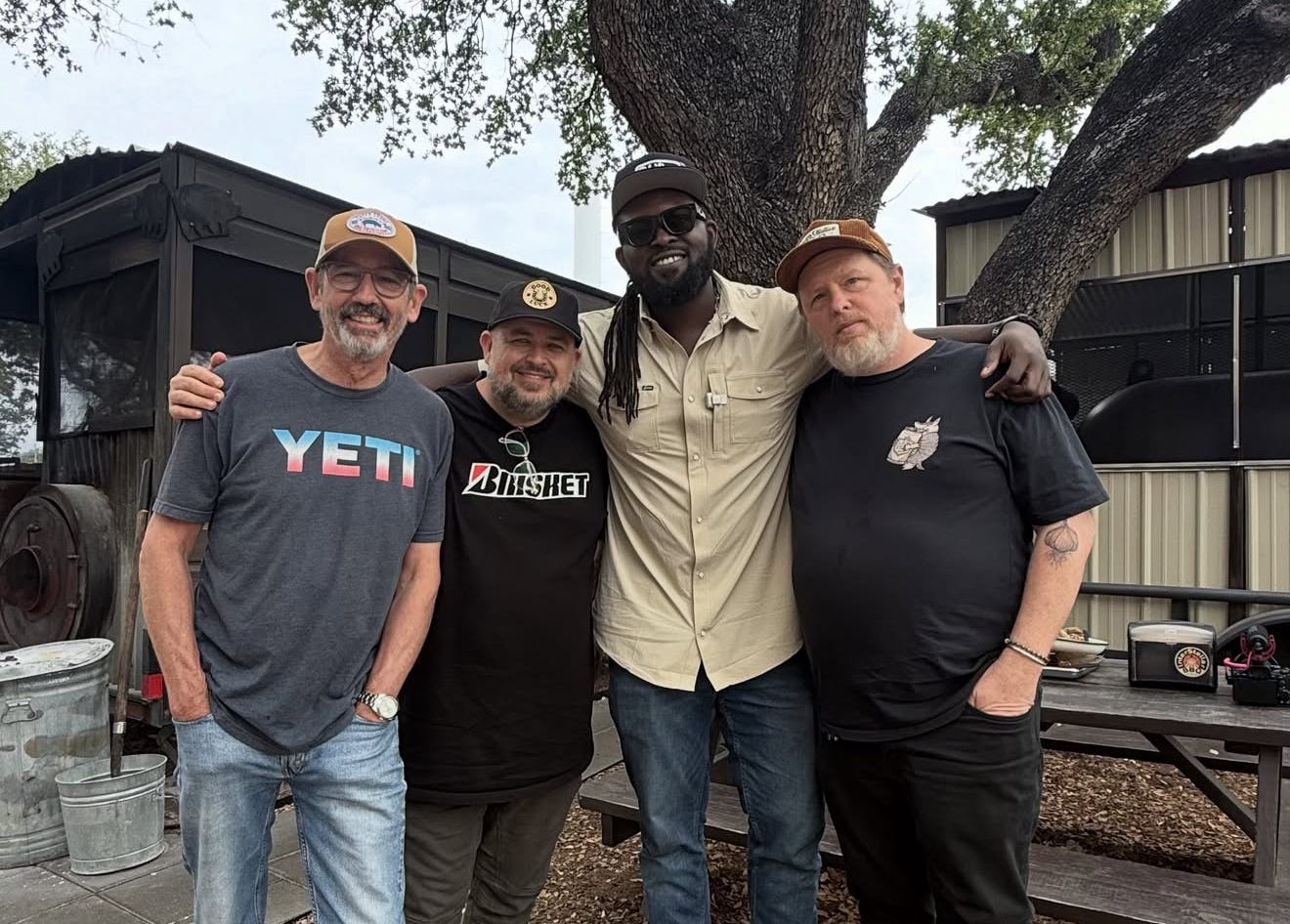
After landing, I grabbed my things, picked up a rental, and headed south to San Marcos to meet up with James Peck and Colter Peck, two men I now jokingly refer to as the “not Peck brothers.” James and I met last year while I was headlining at Meatopia, but we really connected earlier this year while filming “Chopped Castaways” in the Dominican Republic. This was my first time meeting Colter, but James spoke highly of him. Within minutes, I could tell the praise was earned. The kind of friendship that shows up for you does not need a long introduction. It’s rare in this field to find those who see you, truly see you, and want to aid you in reaching your full potential. That’s the kind of guy Colter is.
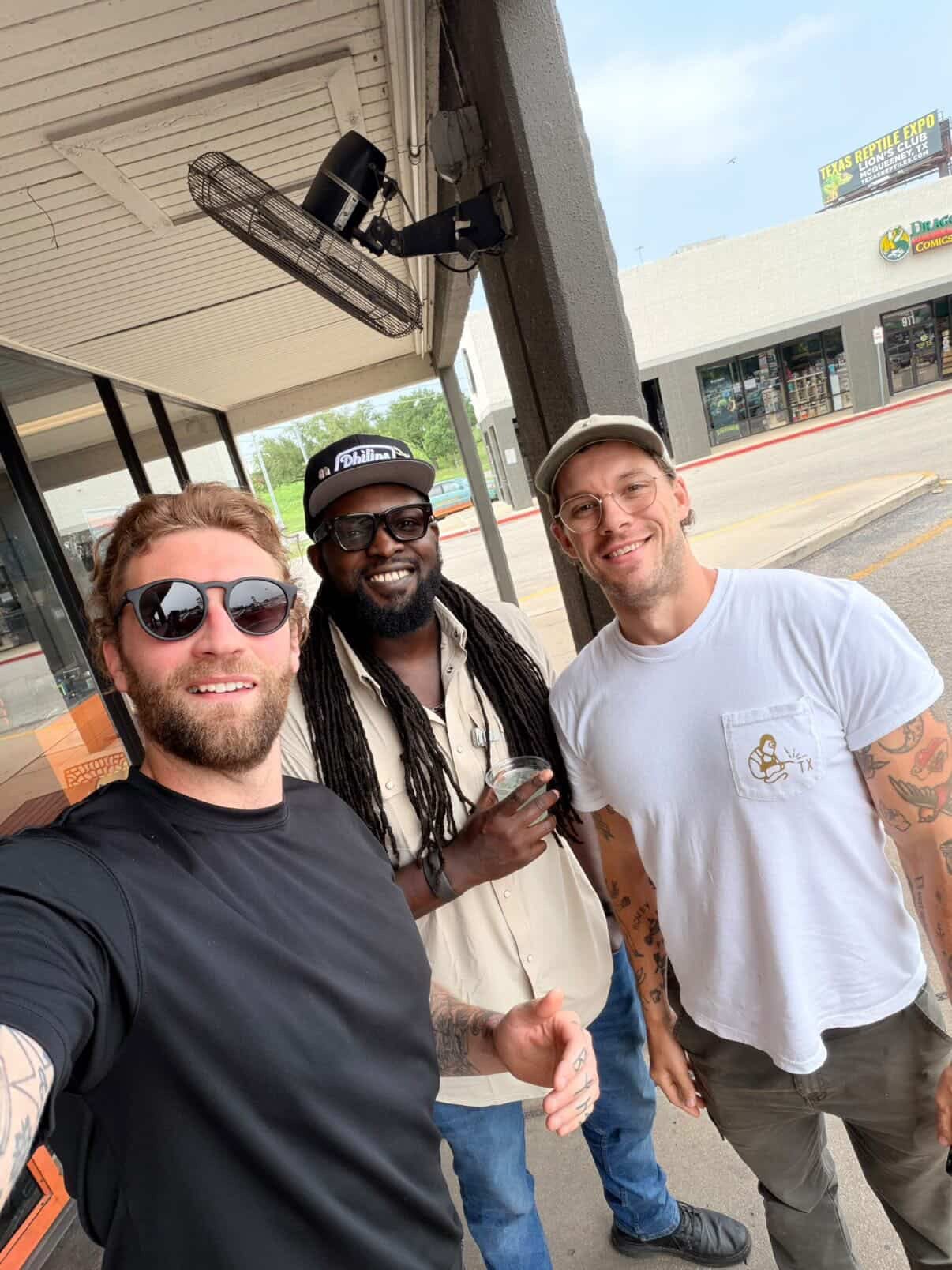
That first day moved at a pace I have learned to respect. Not every travel day needs to be packed tight. Sometimes the smartest play is lunch with good people, then rest, especially when you know the days ahead will demand your full attention. I found myself staying somewhere quiet, clean, and shockingly affordable, the kind of place that stands out when you live on the road and have learned that a good night of sleep is not a luxury, it is a tool. The larger heartbeat behind the week was the Lockhart Rising 3rd-year event, anchored by the Millscale crew, builders I have long respected. They do not just make smokers and fire tables. They build the kind of pieces that feel like heirlooms, steel made with intention. Lately, they have been expanding beyond “builder” into something closer to a lifestyle brand, the way a company like Yeti became more than a cooler. It made sense, then, to see Yeti as one of the sponsors in the mix.
But before the big moments, Austin gave me a masterclass in something quieter: craft meeting craft. The next day, I learned that Jay Beaumont of the Underseasoned Barbecue Podcast from Australia and Tuffy Stone, “The Professor,” were heading to Interstellar Barbecue. Interstellar is one of those places that has earned its reputation, not through hype, but through the steady accumulation of excellence. Michelin recognition. A Texas Monthly Top 50 ranking. The kind of sentence that makes barbecue people lean in, because none of that comes easy.
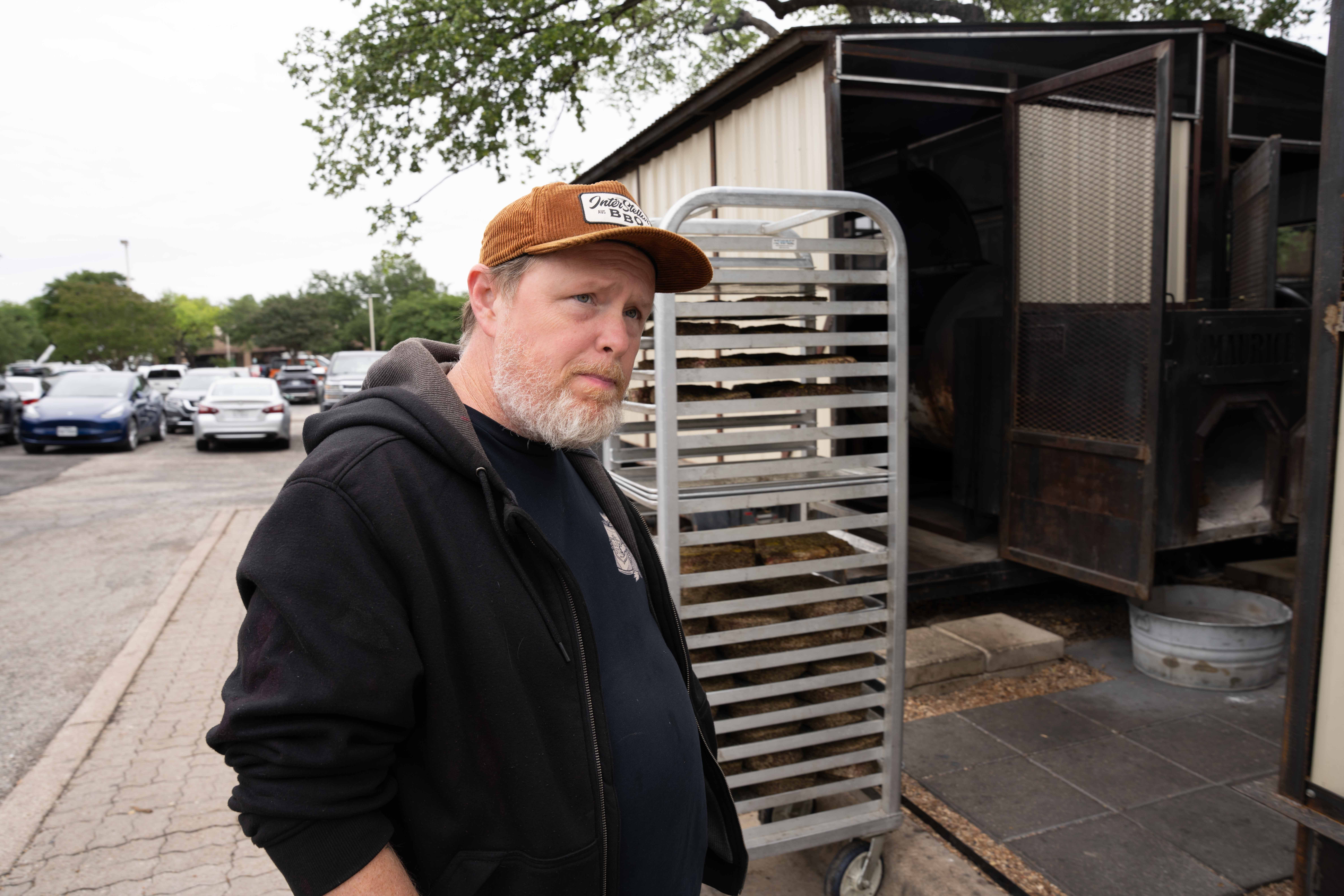
I arrived before they did and caught up with Chef John Bates, who runs the place. It was not our first time meeting. Earlier this year, we connected during a mental health awareness cookout held by Tropical Smokehouse with Rick Mace and his crew, another gathering where barbecue became a bridge instead of just a product. When Tuffy and Jay arrived, they were filming content for Tuffy and Yeti, but what unfolded felt less like a shoot and more like two living legends recognizing something familiar in each other. Respect for the craft.
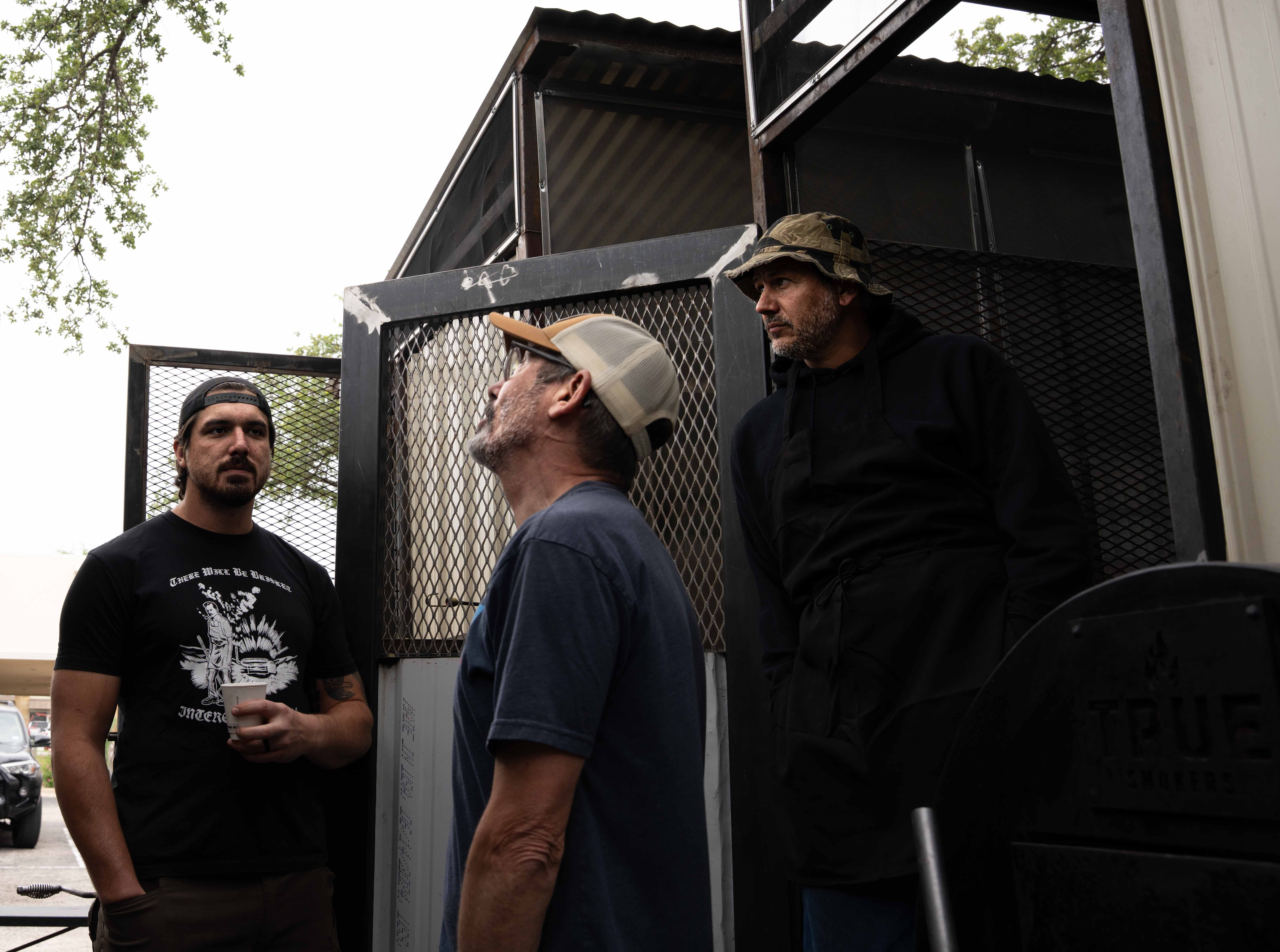
Tuffy mentioned it had been some time since he had been back. He noticed changes immediately, like the smokers now shaded under a tree, details most people would never clock. That is the thing about people who really cook. They see systems. They see how heat moves. They see how space affects flow. Chef Bates invited us behind the scenes, and the kitchen surprised me. Not because it was flashy, but because it was not nearly as large as you would expect for the volume they put out. Still, it ran like a well-oiled machine. Stations were tidy. Nobody was bumping into each other. Communication stayed audible and constant, “behind,” “corner,” “hot pans,” “points,” all the small phrases that keep a team moving like one body. It reminded me that great barbecue, even when it looks rugged from the outside, often runs on precision behind the curtain.
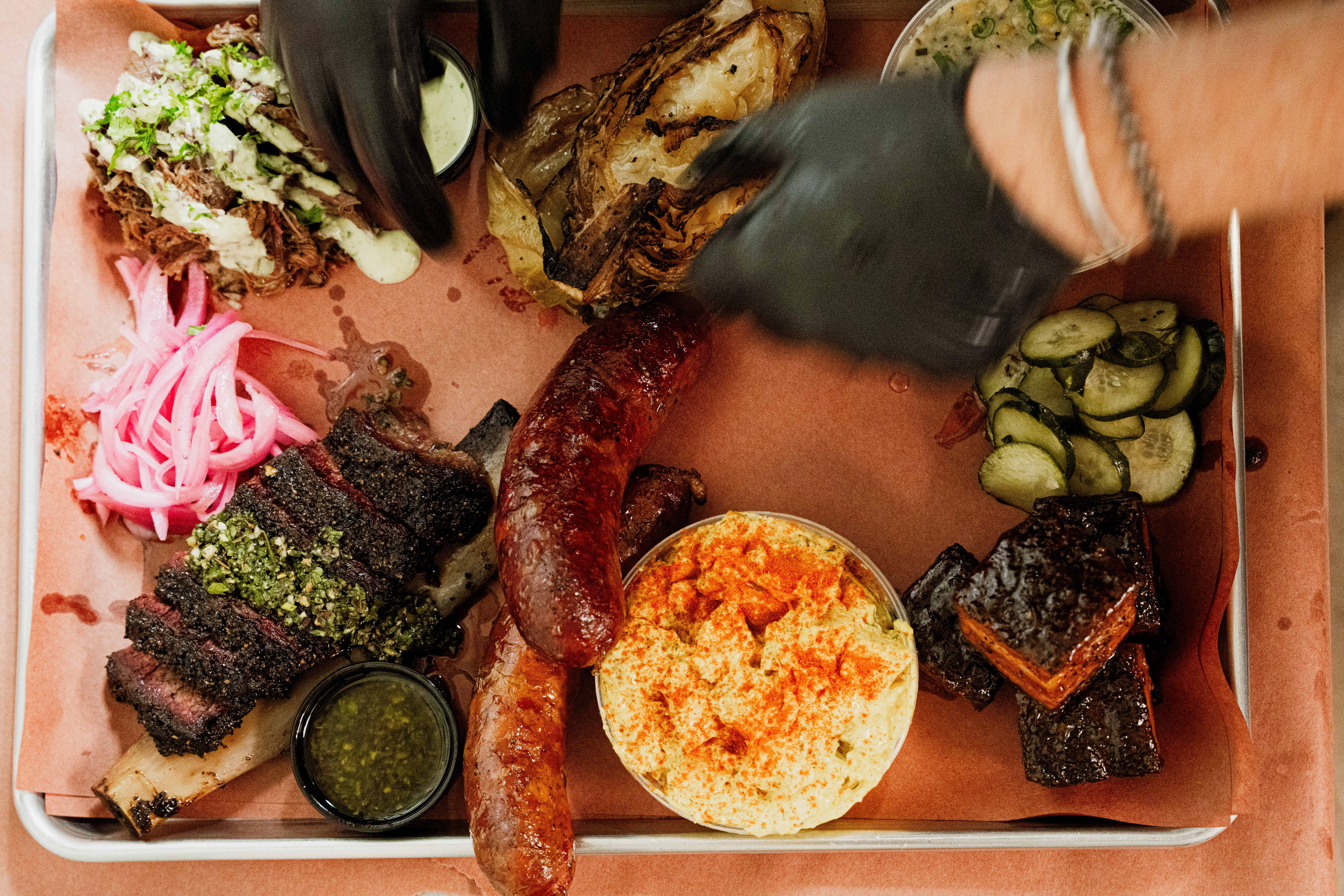
Then came the platter. Jay and I hung back in the kitchen while Chef Bates built it out with the kind of detail that tells you exactly who he is. Beef sausage. Lamb sausage. Duck leg. Sweet tea pork belly, which he made a point not to call burnt ends because, in his words and his intention, it is not a burnt end and he wanted that clear. [The call it a “burnt end” trend in barbecue really needs to end. It’s like calling a porkbutt brisket.]That moment stuck with me. In barbecue, words matter because they shape expectations, and expectations shape trust. I watched him pull meat from a beef rib, then lay the still-hot bone back on the tray, slice the rib meat on a bias, and place it on top so it stayed warm. It was a small act of care that made the whole thing feel elevated without ever feeling precious. Later, he guided us through where to start on the tray, like a conductor leading you through a symphony he had built with smoke and knife work.
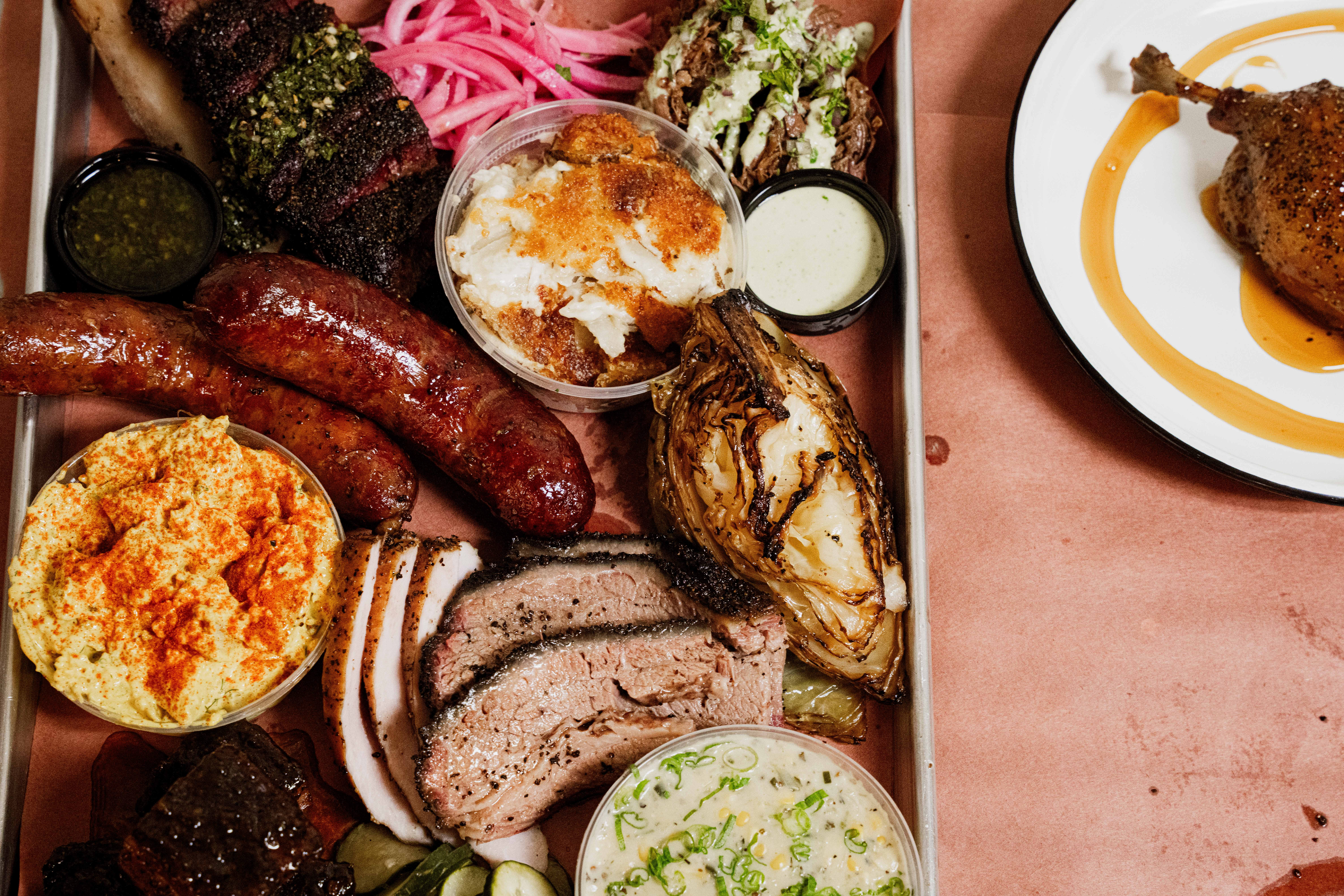
When we sat down to eat, it turned into what I can honestly call some of the best bites of barbecue I have had. And I have had plenty. There was not a bad bite. Everything was balanced. Any two proteins, any side, any pairing, it all worked. You could taste the intentionality, which is something people say casually, but you rarely experience this clearly. Interstellar made its case within the first few minutes at the table, and I understood why the accolades keep finding them. At some point, the cameras went down, and the real conversation began.
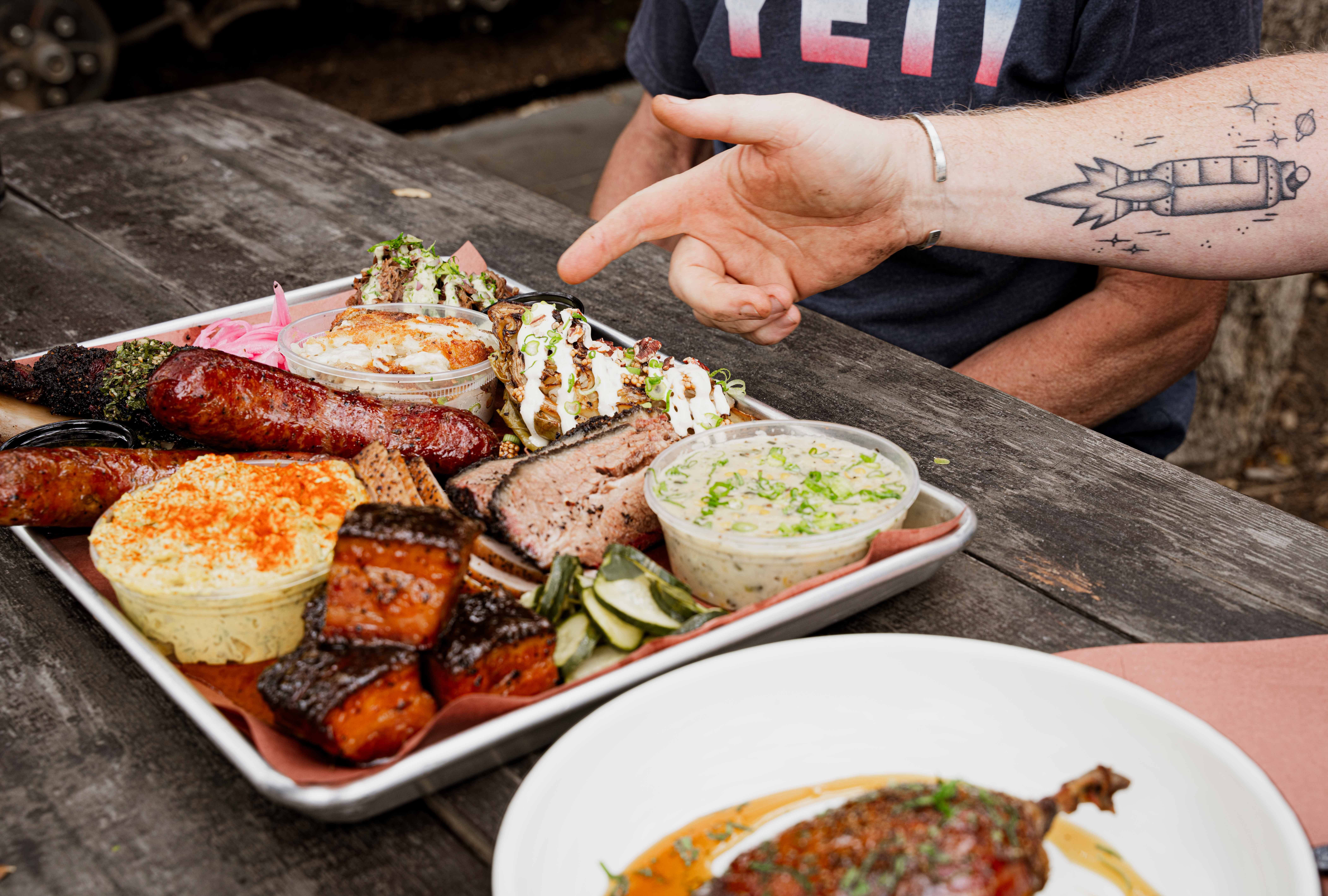
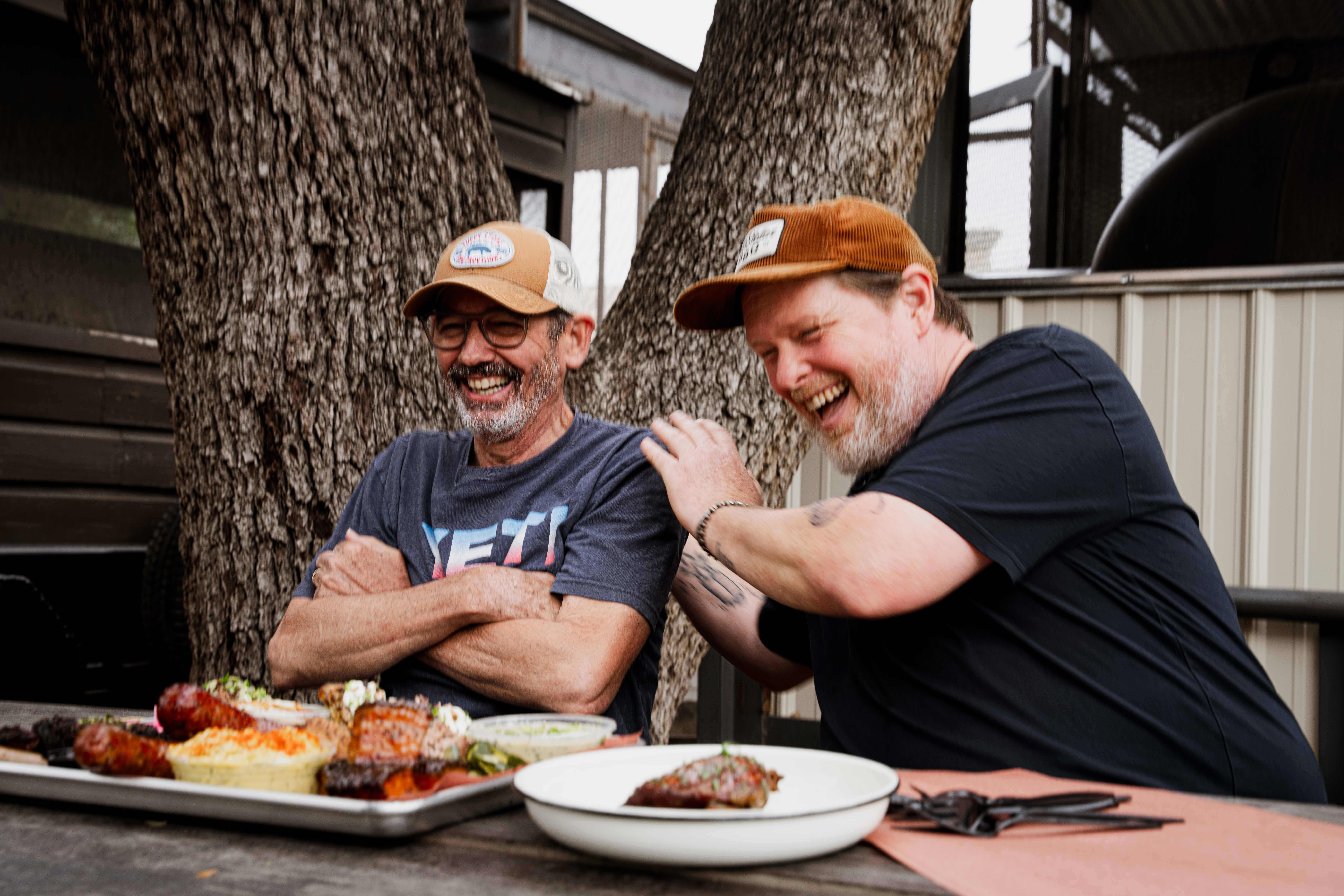
Watching Tuffy Stone and John Bates talk shop, talk craft, talk process, was its own masterclass. Both come from culinary worlds. Both have moved into pitmaster status with a chef’s mind still intact. Sitting there, listening, I felt that familiar gratitude that only hits when you realize you are learning without being lectured. And the day still was not over. There was a Yeti event with Genevieve later, but that is another chapter. If there was a theme to day one, it was this: sometimes the most memorable weeks do not begin with perfect plans. They begin with a pivot. With a hard decision. Trust your gut when something feels off, then stay open enough to let the road reward you with something better.
Austin did that for me.
Not by being loud about it, but by offering proof in small, specific ways.
Proof that craft still matters.
Proof that hospitality is an art form.
Proof that greatness, when you are close enough to study it, is rarely mysterious. It is built through repetition, discipline, and a stubborn devotion to details other people do not notice.
If you are traveling for barbecue, especially in a place like Austin, here are the practical takeaways I carried out of day one without even trying to:
Plan for rest like it is part of the work. Quiet, clean, affordable stays matter when you live on the road.
Seek the behind-the-scenes view when you can. Great barbecue is not only about smoke. It is about systems, communication, and consistency.
Pay attention to language. Calling pork belly “burnt ends” might sell, but being precise protects the craft.
Watch how the best serve food. Keeping a rib bone hot so the sliced meat stays warm is not a trick, it’s respect with a bit of food science.
That is what day one gave me. Not just the taste of barbecue, but the texture of the people behind it. And when you are lucky, that is what travel becomes. A series of meals that feed you, yes, but also a series of moments that sharpen how you see.