


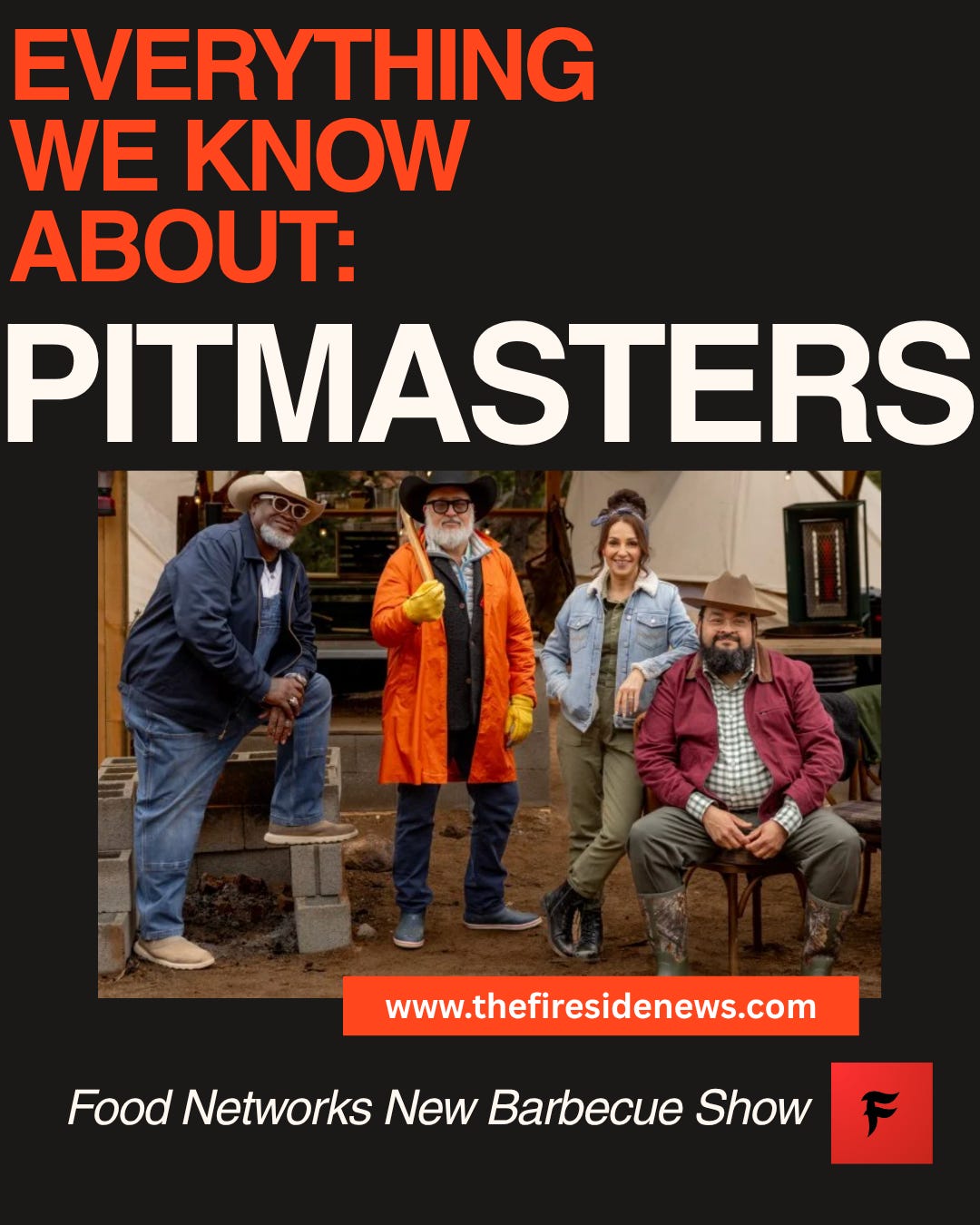
There is a reason barbecue fans can spot the difference between a cooking show and a real firefight almost immediately. One is clean, clipped and built for the clock. The other is smoke in your eyes, sleep deprivation in your bones, and the quiet pressure of knowing one bad call with the fire can ruin everything that comes after it.
That is why Food Network’s new series Pitmasters immediately caught my attention.
Not because barbecue on television is new. It is not. And not because competition cooking is some fresh concept either. It is not. What makes this one worth paying attention to is the way it seems to understand that barbecue, when done at a high level, is not just about seasoning meat and waiting around for applause. It is a test of management, stamina, instinct, teamwork, and nerve.
According to Food Network’s preview materials, Pitmasters throws nine two-person teams into a weeklong wilderness battle where they will cook from sunrise to sunset to sunrise again, chasing up to $50,000 while managing fire, fatigue, and surprise twists along the way. It shifts the focus away from polished sound bites and toward something a little more honest. Fire is not passive. Barbecue is not neat. And pitmasters do not do their best work in perfect conditions. And most importantly, no pellets or plugs, or so I hope.
That alone makes this show more interesting than the average food competition.
The first-episode challenge says a lot about where the series is trying to plant its flag. Teams have nine hours to build a family-style platter with two proteins and at least one side that defines their barbecue style and point of view. Then, while that larger cook is still moving, they get hit with a “Flash Burn” challenge and have just 60 minutes to produce a one-bite barbecue dish. [This exact set up as been seen in prior shows as well]. That is a strong tension point because it asks for two very different kinds of skill at once. Can you cook with patience, discipline, and structure while also thinking fast enough to compress your flavor into a single bite? That is not just cooking. That is control.
And that is where Pitmasters has a chance to matter.
Barbecue has always lived in multiple worlds at once. It is tradition and innovation. Family history and personal obsession. Community food and competitive sport. Backyard ritual and professional craft. Too often, television flattens that. It turns pitmasters into caricatures, strips the process down to macho shorthand, and forgets that the best people in this space are not just fire tenders. They are problem-solvers. They are historians. They are builders of flavor and memory.
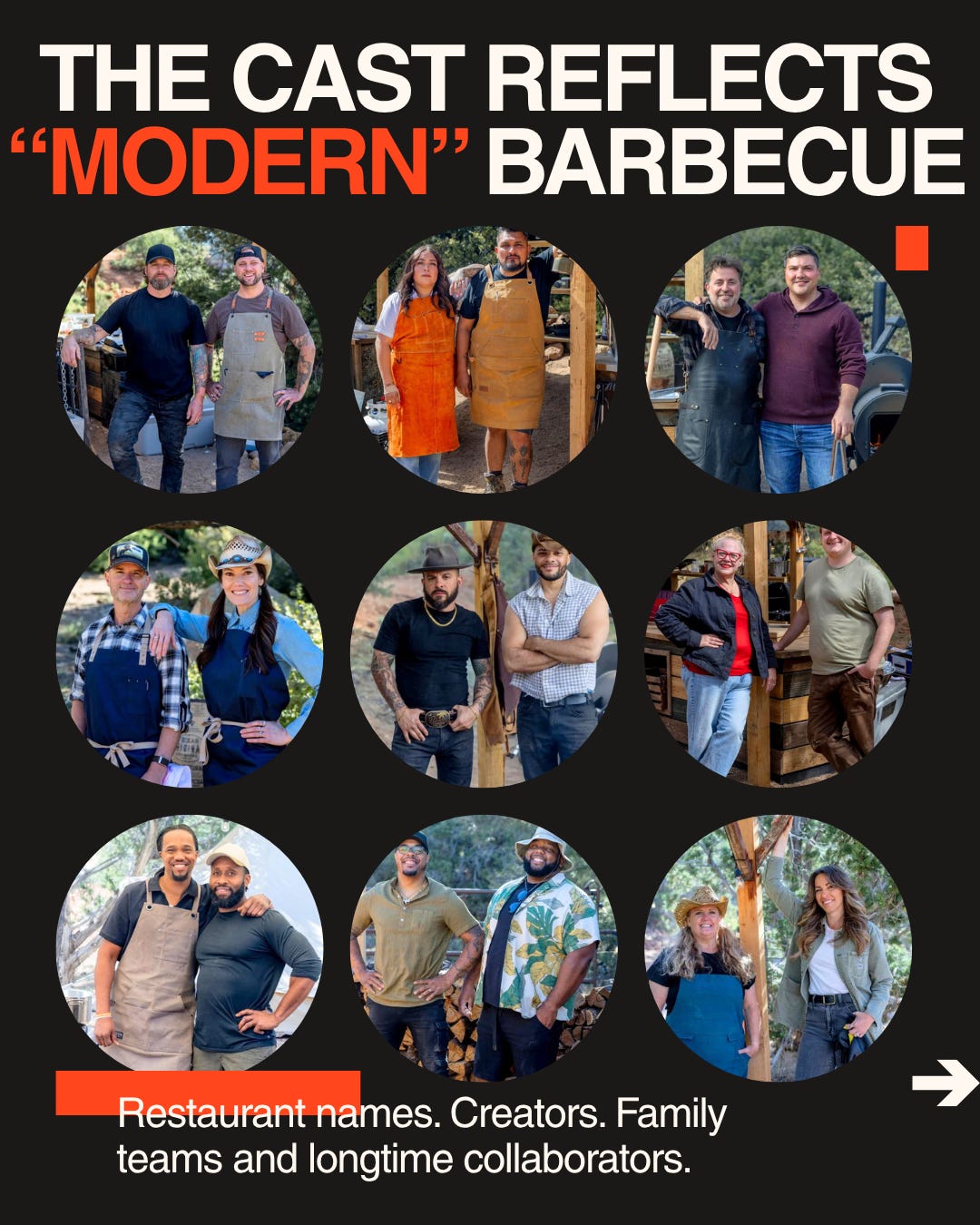
This cast, at least on paper, looks like it may reflect some of that range.
Food Network’s official roster includes restaurant operators, content creators, husband-and-wife teams, longtime collaborators and family teams. There are names that will be familiar to people who stay close to barbecue media and names that come from the restaurant world. That mix is smart. Barbecue today does not live in one lane. It lives in brick-and-mortar joints, on competition grounds, in digital communities, at pop-ups, on offsets, over open flame and across different regional traditions. A show that wants to say something real about modern barbecue should look like that.
The judges help reinforce that idea. Andrew Zimmern gives the show a larger food-world presence, while Jess Pryles, Moe Cason and Ernest Servantes bring different forms of live-fire credibility to the table. That combination suggests the show wants barbecue authority, but also wants to translate that authority to a wider audience. If it works, that matters too. Barbecue deserves to be treated as more than a summer content vertical.
What I also find compelling is the emphasis on team dynamics. A lot of barbecue storytelling celebrates the lone figure at the pit, but anyone who has spent serious time around this world knows that is only part of the truth. Barbecue is built on systems. It is built on trust. It is built on reading each other without needing a full conversation every five minutes. In a format like this, where exhaustion becomes part of the challenge, partnership may matter as much as palate. We may get a chance to see the community aspect of barbecue.
That is the real hook for me.
Not just who can cook the best plate. Who can keep their head. Who can hold a standard when the fire shifts, the clock gets loud and the body starts pushing back. Who can still make something with clarity when the conditions are working against them. This may be a chance where sleep is the secret ingredient.
If Pitmasters can capture even part of that honestly, it could be one of the more interesting barbecue shows Food Network has put on in a long time. Not because it is loud, but because barbecue at this level deserves a format that shows the labor behind the romance. Because the smoke always looks good on camera. The question is whether the work does too.